
London’s escort scene didn’t start with apps or Instagram DMs. It began in back alleys of 17th-century taverns, whispered about in drawing rooms, and documented in court records long before the internet existed. The idea of paying for companionship isn’t new-it’s as old as the city itself. What changed over centuries isn’t the desire for connection, but how it was offered, regulated, and perceived.
Early Beginnings: The Rise of the Courtesan in Georgian London
In the 1700s, London was booming. Trade, empire, and wealth poured in-and so did demand for companionship beyond marriage. Courtesans weren’t just prostitutes; they were educated, stylish women who offered conversation, music, and social access. Think of them as high-end consultants for the elite. Figures like Mary Robinson, once mistress to the Prince of Wales, lived in luxury, owned property, and published poetry. Her salary? Enough to buy a townhouse in Mayfair.
These women operated in a gray zone. Legally, prostitution was unregulated, but social standing gave them protection. They were invited to balls, referenced in newspapers, and even sat for portraits by Reynolds. Their clients weren’t just rich men-they were politicians, artists, and aristocrats who valued discretion and elegance. The line between mistress and paid companion was thin, and often blurred by class.
The Victorian Era: Respectability and Secret Networks
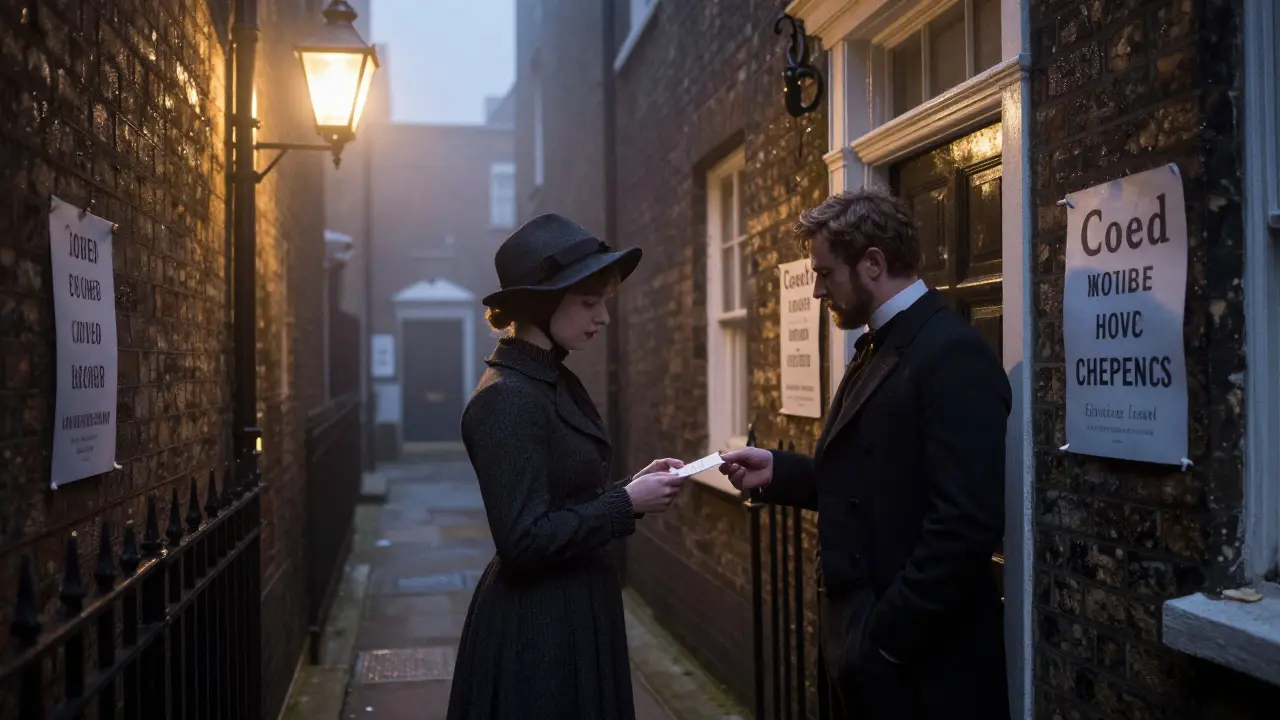
By the 1800s, Victorian morality clamped down on public vice. Prostitution was condemned in sermons and newspapers. But behind closed doors, demand didn’t drop-it just went underground. Brothels moved from open streets to quiet terraces in Soho and St. Giles. Women advertised through coded language: "ladies for company," "gentleman’s evening companion," or "resident at a respectable boarding house."
Police raids happened, but corruption was common. Officers took bribes to look the other way. The 1885 Criminal Law Amendment Act raised the age of consent and targeted brothel-keepers-but not the clients. That imbalance shaped the modern stigma: the woman was criminalized, the man was invisible.
Letters from the time show wealthy men hiring women for dinner, theater, and long walks in Hyde Park. No sex was mentioned. Just company. That’s the same language used today. The business model hadn’t changed-only the vocabulary.
Post-War London: From Underground to Underground Press
After World War II, London’s social fabric shifted. Women entered the workforce. Traditional marriage norms weakened. And with the rise of magazines like Mayfair and Men Only, escort ads began appearing in print. These weren’t explicit. They used phrases like "elegant lady for social engagements" or "discreet companion for travel."
By the 1970s, escort agencies started opening in discreet offices near Bond Street. They screened clients, set rates, and provided basic safety checks. It was still illegal to run a brothel, but agencies claimed they were "introduction services." Courts kept ruling against them-but enforcement was patchy. In 1979, a landmark case in Westminster saw an agency fined £2,000 for "maintaining a common brothel." The owner’s defense? "We only introduced people. What they did afterward was their business."
The legal gray zone held. And the market grew.
The Digital Revolution: Apps, Ads, and Anonymity
The 2000s changed everything. Craigslist, Backpage, and later, private forums and encrypted apps, made it easy to connect without agencies. Suddenly, anyone with a phone and a decent photo could advertise. London became one of Europe’s largest online escort markets. Ads surged in neighborhoods like Chelsea, Notting Hill, and Camden.
Regulation lagged. The 2003 Sexual Offences Act made soliciting illegal-but didn’t touch advertising. Police focused on street-based sex work, not online services. By 2015, an estimated 12,000 individuals in London were offering companionship services, mostly through digital platforms. That number didn’t include those who worked privately, without ads.
What’s striking is how much the language stayed the same. "Companion," "discreet," "evening out," "travel partner." These aren’t new terms. They’re just updated versions of what Victorian women used to avoid jail.
Modern London: Legal Ambiguity and Client Expectations
Today, escort services in London exist in a legal limbo. It’s not illegal to sell companionship. It’s not illegal to advertise it. But it is illegal to run a brothel, to solicit in public, or to control someone else’s work for profit. That means individual escorts can legally operate-but only if they avoid any structure that looks like an agency.
Most now work independently. They use private websites, Telegram channels, or encrypted apps. Payment is digital-PayPal, cryptocurrency, bank transfer. No cash. No receipts. No paper trail. Many have full-time jobs, study at university, or run small businesses. They’re mothers, artists, linguists, and ex-lawyers.
Client expectations have shifted too. More people want emotional connection, not just sex. A 2023 survey by a London-based research group found that 68% of clients listed "feeling heard" as their top reason for hiring a companion. Only 29% cited sexual activity as the primary goal. Loneliness, not lust, is driving demand.

What’s Next? Regulation, Rights, and Real Change
London’s escort industry is at a turning point. Advocacy groups like the English Collective of Prostitutes have pushed for decriminalization-not legalization. They argue that criminalizing clients or third parties doesn’t protect workers-it pushes them deeper into danger.
Other cities have tried different models. In New Zealand, full decriminalization led to safer working conditions and better access to healthcare. In Sweden, criminalizing buyers reduced demand-but also drove services further underground. London hasn’t chosen a path. Yet.
One thing is clear: the industry won’t disappear. Demand is too deep, too human. The question isn’t whether escort services will continue-it’s whether London will treat those who offer them as people, not problems.
Myths vs. Reality
- Myth: All escorts are exploited. Reality: Many choose this work for flexibility, pay, or autonomy. A 2022 study of 400 London-based companions found 72% said they were satisfied with their choice.
- Myth: Escorts are mostly foreign women. Reality: Over 60% are UK citizens. Many are London-born.
- Myth: It’s all about sex. Reality: Most gigs involve dinner, walks, conversation, or attending events. Sexual contact is often optional and negotiated.
- Myth: Only rich men use these services. Reality: Clients range from CEOs to teachers, students, and retirees. Age? Mostly 30-65.
Why This History Matters
Understanding the history of escort services in London isn’t about gossip or titillation. It’s about recognizing a persistent human need: connection. For centuries, people have paid for someone to listen, to accompany them, to make them feel less alone. That’s not a flaw in society-it’s a reflection of it.
The women and men who’ve offered these services weren’t just transactional figures. They were survivors, entrepreneurs, artists, and sometimes, pioneers. They navigated laws that criminalized their livelihoods, stigma that silenced their voices, and systems that refused to see them as full human beings.
Today’s escort industry in London is shaped by that legacy. It’s not a fringe oddity. It’s a mirror. And what it reflects is the same thing it always has: loneliness, desire, power, and the quiet, enduring search for dignity.
Is it legal to hire an escort in London?
Yes, it’s legal to pay for companionship in London-meaning dinner, conversation, or attending events together. What’s illegal is running a brothel, soliciting in public, or paying someone if they’re being controlled or exploited by a third party. Individual escorts working independently are not breaking the law.
Are escort agencies legal in London?
No. Operating an agency that manages or profits from multiple individuals offering sexual services is considered running a brothel, which is illegal under the 1956 Sexual Offences Act. Many agencies claim to be "introduction services," but courts have repeatedly ruled that if they screen, schedule, or collect payment, they’re crossing the line.
Do escorts in London mostly work on the streets?
Almost none do anymore. Street-based sex work has declined sharply since the 2000s. Today, nearly all escort services in London are arranged online-through private websites, encrypted messaging apps, or invitation-only platforms. Clients and workers coordinate privately, often meeting in hotels, apartments, or public venues like cafes and restaurants.
How much do escorts in London charge?
Rates vary widely based on experience, location, and services offered. Most independent escorts charge between £150 and £400 per hour. Some offer half-day or full-day packages for £800-£2,000. Higher-end services, especially those with specialized skills (like multilingual companions or event partners), can charge over £3,000 for a night. These prices reflect time, discretion, and emotional labor-not just physical intimacy.
Are escort services in London only for men?
No. While the majority of clients are men, there’s a growing number of women hiring male companions, and non-binary individuals hiring companions of any gender. A 2024 survey of 1,200 London-based clients found that 18% identified as female and 5% as non-binary. The demand for emotional connection is universal, regardless of gender.